Water damage restoration in Chula Vista, CA
Water on the floor, or a stain creeping across the ceiling? Describe it once and we pass it to one restoration company that works in Chula Vista.
- No charge to send a request
- Serving Chula Vista and the South Bay
Who to call for water damage restoration in Chula Vista, CA
Stop the water first. If a supply line, a toilet or the water heater is still leaking, close the valve that feeds it, or the main shutoff for the house. If water has reached outlets, cords or a power strip, stay clear of it until the power to that circuit is off.
After that you usually need two different trades. A plumber finds and fixes the leak. A restoration company takes the water out, dries the house and replaces whatever cannot be dried. This site is about the second job.
WaterFirst sends nobody to your house and does none of the work. It is a request service: you tell it what happened, and your request goes to one local restoration company that serves Chula Vista. That company contacts you, looks at the damage and quotes its own price. Your details are not sold to a list, and you are free to turn the company down.
This page covers the whole city, Eastlake and Otay Ranch included. Homes just outside it, in National City, Bonita or Imperial Beach, answer to a different city or county office for sewers and permits, set out in water damage help for the rest of the South Bay.
Emergency water removal and extraction
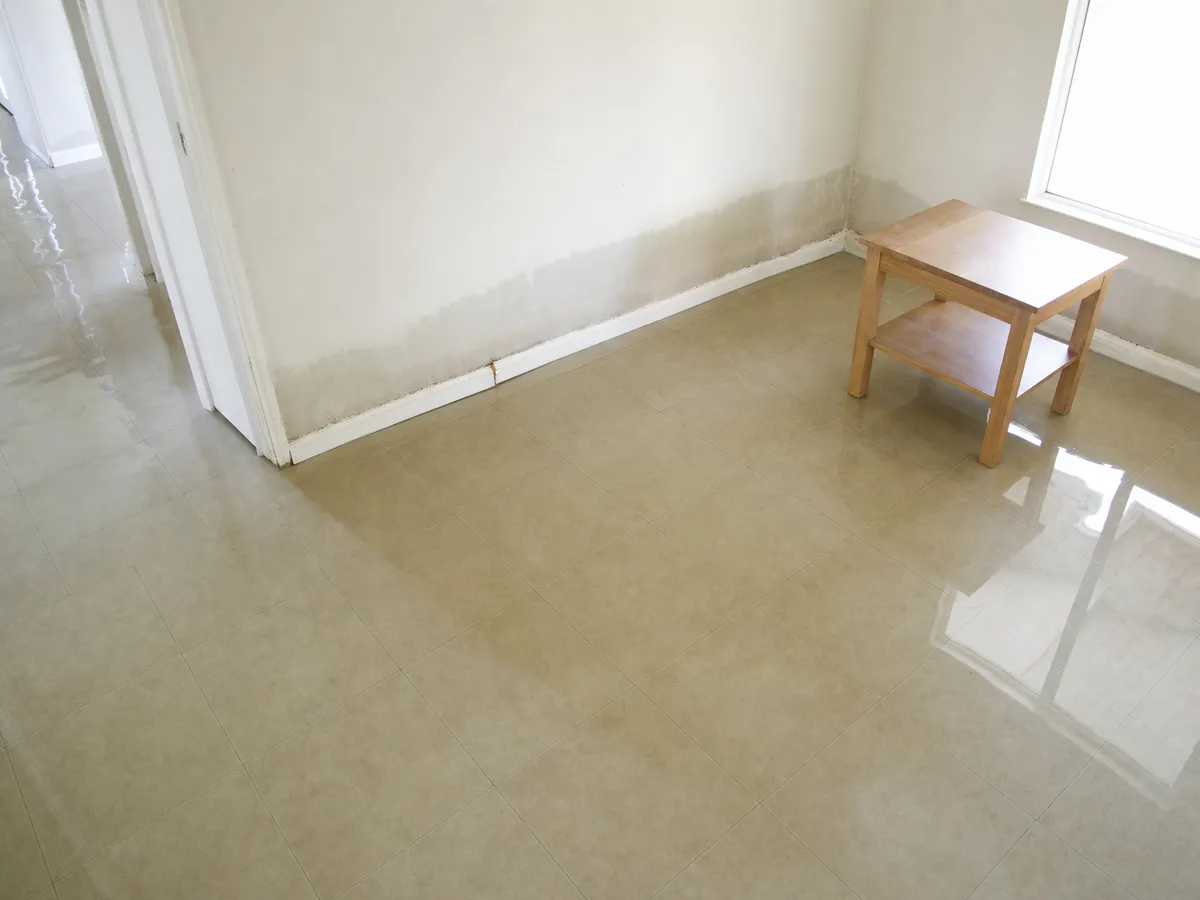
Standing water comes out before anything else, because nothing starts drying while it sits on the floor. Water extraction means pumping out what is standing and pulling out what the carpet, the pad and the gaps between floorboards have soaked up.
The EPA gives a time limit you can check for yourself. Its mold guidance allows a day or two, 24 to 48 hours, to get wet materials dry before mold takes hold. Nobody can honestly tell you from a web page when a company will get to your door. The form asks what got wet and how much of it, which is what a company needs to know before it decides what to bring.
Water mitigation, structural drying and repair
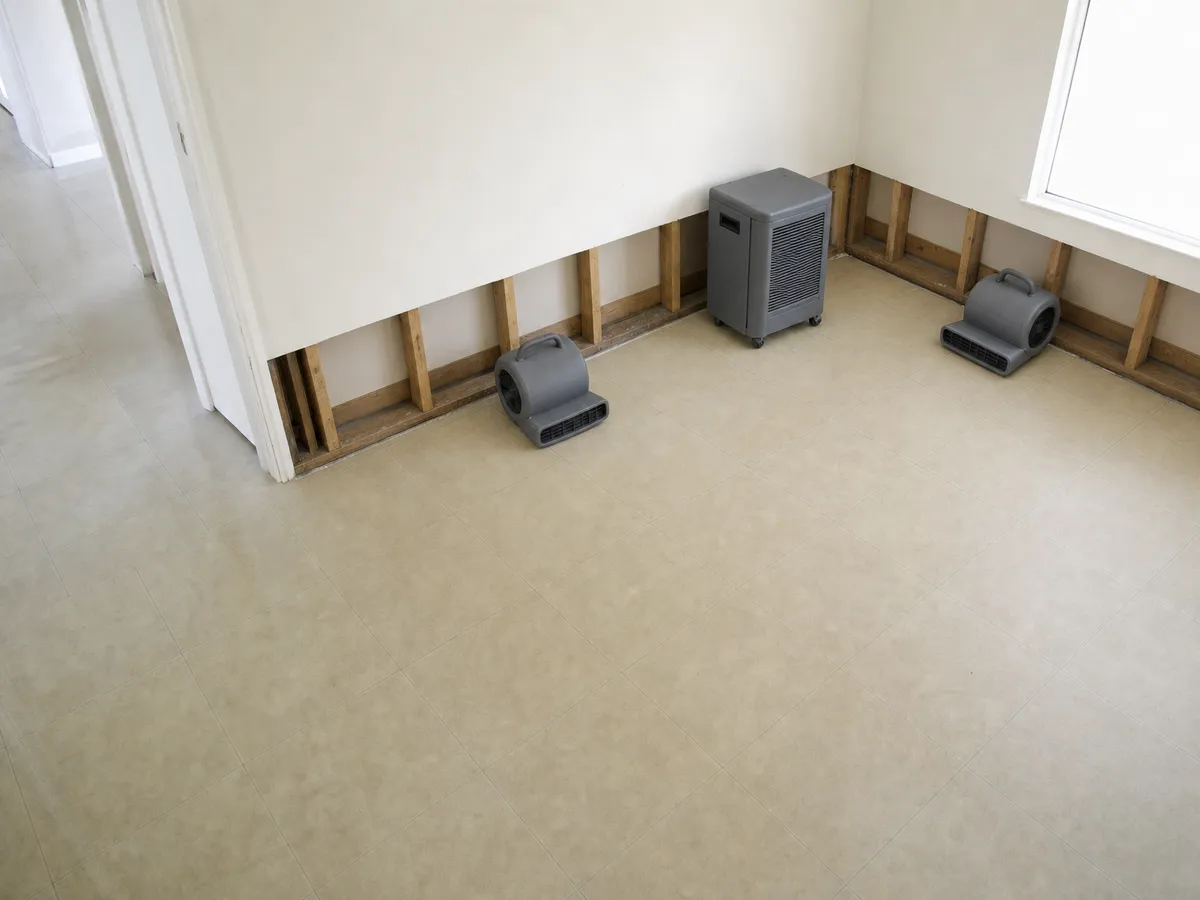
Restoration is two jobs that often get sold as one. Mitigation stops the damage from spreading: extraction, cutting out wet material that cannot be saved, then dehumidifiers and air movers running until the drywall, the framing and the floor test dry. Repair is the rebuild: drywall, baseboard, paint, flooring, sometimes cabinets. Some companies do both halves and some hand the rebuild to a general contractor, so ask which you are getting before anything is torn out.
Carpet, hardwood floors and drywall
Wet drywall, insulation and carpet pad that cannot be dried quickly are usually cut out and thrown away rather than dried in place. Hardwood and laminate swell and cup as the boards take up water, and whether a floor can be dried flat or has to be replaced is a call to get in writing. If new flooring is going down on a concrete slab, ask to see a moisture reading from the slab first.
Flood and storm damage cleanup
Rain on this stretch of coast comes in one short season. NOAA's 1991 to 2020 normals for San Diego's Lindbergh Field, up the bay from Chula Vista, put 8.10 of the year's 9.79 inches between November and March, and 0.26 inches across June to September.
So storm damage here comes in winter, and usually in small ways: water under a slider or an exterior door, runoff pooling against a stucco wall, a roof that held all summer and leaks in the first real storm. Cleaning up after a flood differs from a burst pipe in one way that matters. Water that came in from outside can carry sewage and whatever was on the ground, so the porous things it soaked are treated as contaminated.
Flood also changes who pays, because most homeowners insurance does not cover flood damage, a point the guide to water damage restoration cost takes further.
Ceiling water damage repair
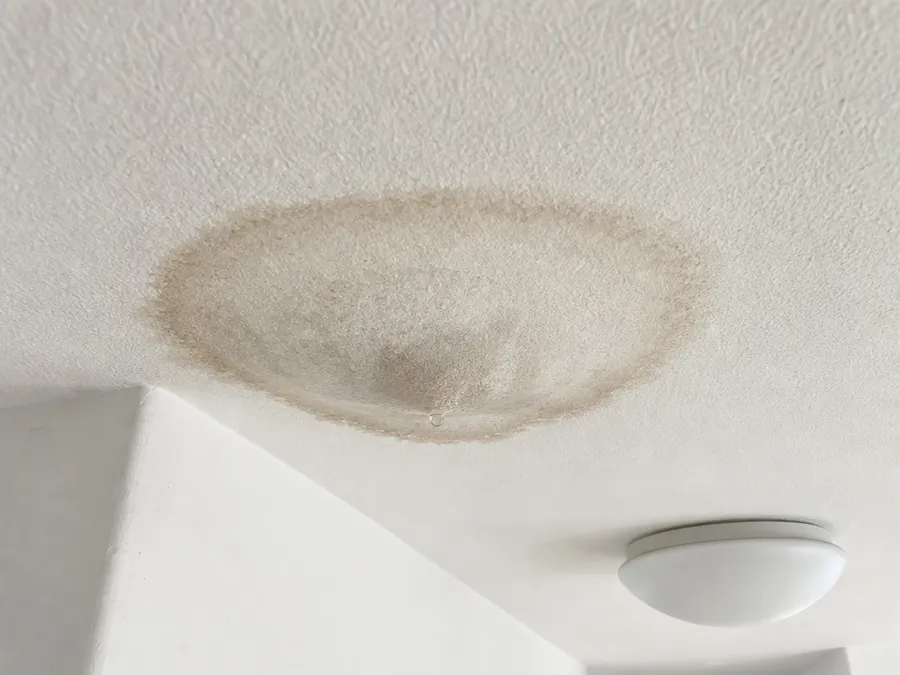
When a brown ring shows up overhead, water has been sitting on the back of the drywall. In a single-storey house it is often the roof or a line in the attic; in a two-storey house, often a bathroom or a supply line upstairs. Painting over the ring hides it for a while. It does nothing about the wet insulation above it.
A sag is a warning. Water pooled on drywall is heavy, and the board can give way, so keep people and furniture out from under it and leave it alone.
Done as restoration, the job goes in order: find where the water came from, open the ceiling enough to dry the cavity, replace wet insulation, then patch and paint. A drywall patch on its own covers the stain and leaves the cause where it was.
In a condo, water through the ceiling usually started in someone else's unit or in a shared pipe, and California law splits that repair between you and the association. The guide to who pays for condo water damage in California sets out the default rule.
What causes water damage in Chula Vista homes
Outside the short rainy season, the water usually comes from inside the house, from the plumbing and the appliances that use it.
Water heater leaks
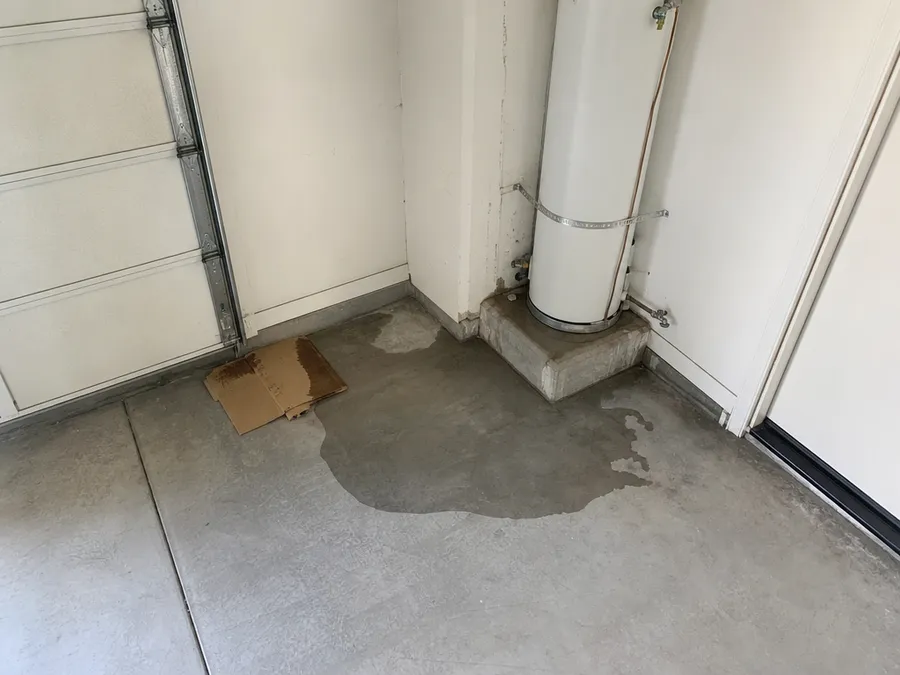
Water at the base of a tank heater can mean the tank itself has failed, or that a fitting or the relief valve is dripping. A plumber decides which. Shut off the cold-water supply to the heater, and its gas or power, before anything else. The water that has already run across the garage floor and under the wall into the house is the restoration company's part.
Slab leaks
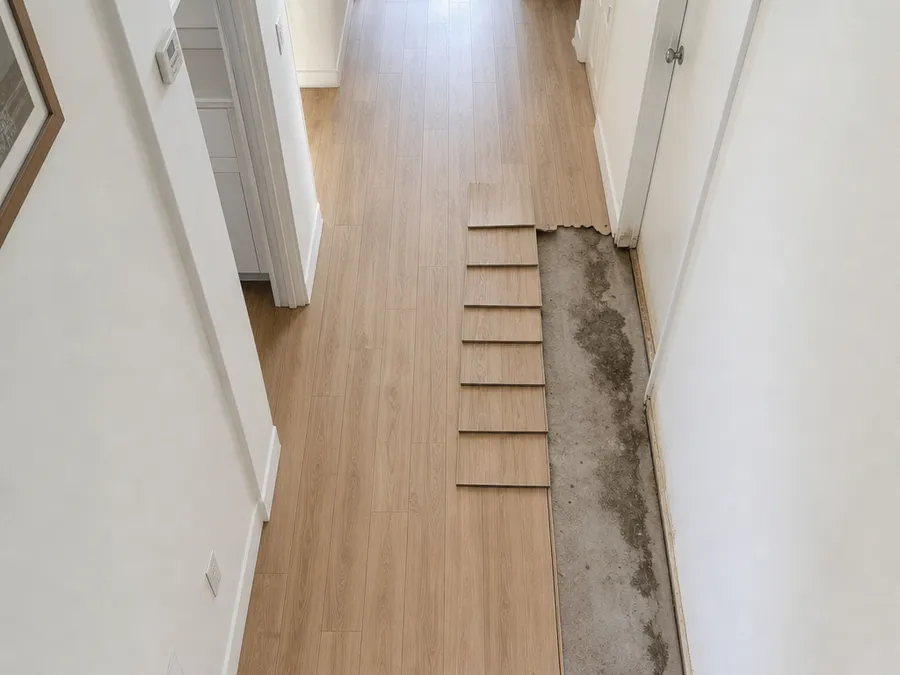
A slab leak is a leak in a water line under or inside the concrete floor. It can show up as a warm patch on the floor, the sound of running water with every tap off, or a bill that jumps for no reason. Finding and repairing the line is plumbing, and this site does not pass on that work. What the leak leaves behind is restoration: flooring that has to come up, a slab that has to dry, and baseboard and drywall that wicked water up from below.
Burst pipes and failed supply lines
The braided hose under a sink or toilet, the washing machine hoses and the fridge's ice maker line all run at full pressure until somebody turns them off. A line that lets go while the house is empty can wet several rooms. Close the valve behind the fixture or the main, then write down which rooms the water reached.
Mold and sewage cleanup in Chula Vista
Mold and sewage need different handling from a clean leak, and each has its own page. So does the question of what the work costs.
-

Mold remediation
When a slow leak has had weeks to feed growth, or the musty smell showed up before any stain did.
Mold remediation in Chula Vista -

Sewage cleanup
A toilet, tub or drain backing up with sewage is the dirtiest kind of water damage, and more has to be thrown away.
Sewage cleanup in Chula Vista -

What restoration costs
Published national price ranges, what pushes a bill up or down, and what homeowners insurance tends to cover.
Water damage restoration cost
Hidden leaks and your Chula Vista water bill
Chula Vista gets its water from two different agencies. Sweetwater Authority serves the western and central parts of the city, and Otay Water District serves eastern Chula Vista. Which one sends your bill decides whose leak rules apply.
Both tell you how to check for a hidden leak with your own water meter. Sweetwater's leak test comes down to turning off everything that uses water, reading the meter, waiting, and reading it again. If the meter moved, water is going somewhere you cannot see, and under a slab is one of the places it goes.
If a leak ran up your bill in Otay's area, the district takes a leak adjustment request once the leak is repaired, with proof. It is a one-time adjustment per address. A bill credit does not dry a wall, though, and if the meter says water has been running into the house for weeks, somebody should look at what it soaked.
Water damage questions from Chula Vista homeowners
How long does restoration take after water damage?
It depends on how much got wet and how long it sat. Drying should be measured rather than guessed: the equipment stays until moisture readings in the walls and floor reach the target the company set at the start. The rebuild takes as long as the materials take, and new cabinets or special-order flooring can add weeks.
Will water damage go away on its own?
The surface may dry, but water held inside drywall, insulation or under flooring stays much longer, and that is where mold starts. A closed wall cavity will not dry by itself inside the day or two the EPA allows before mold starts.
What is water damage repair called?
In the trade you will hear two words. Water mitigation is the emergency part: removing water, cutting out what cannot be saved and drying the structure. Restoration or repair is the rebuild afterwards. Some companies do both and some do only the first, so ask.
How do I choose a water damage restoration company?
Ask for a written estimate that says what will be removed, what equipment will run and for how long, and how dryness will be measured. If it will also do the rebuild, look up its license on the Contractors State License Board site: California requires one for construction work of $500 or more, labor and materials combined. If it will not, ask who does the repairs.
Who do I call for home water damage in Chula Vista?
For the leak itself, a plumber. For the water it left behind, a restoration company. If you want one found for you, describe the damage and we pass it to one local company that serves Chula Vista. If you already know a company you trust, contact them directly.
How a water damage request works
-
Say what got wet
Tell us where the water came from, which rooms it reached and whether it is still running. Photos are optional and help the company plan.
-
One company reads it
The request goes to a single restoration company that covers Chula Vista. It is not posted to a marketplace or sent to several firms at once.
-
The company gets in touch
They ask what they need, arrange to see the damage and give you their price. Whether to go ahead is up to you.
Tell us what the water reached
Send one request, and one local restoration company receives it. Sending it costs nothing, and the company gives you its own price.